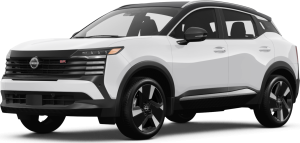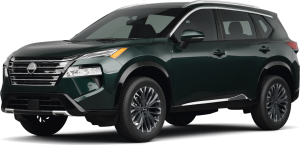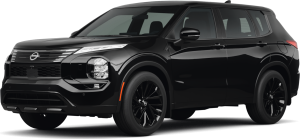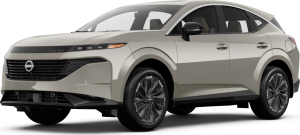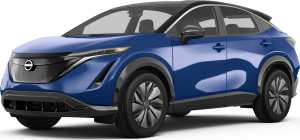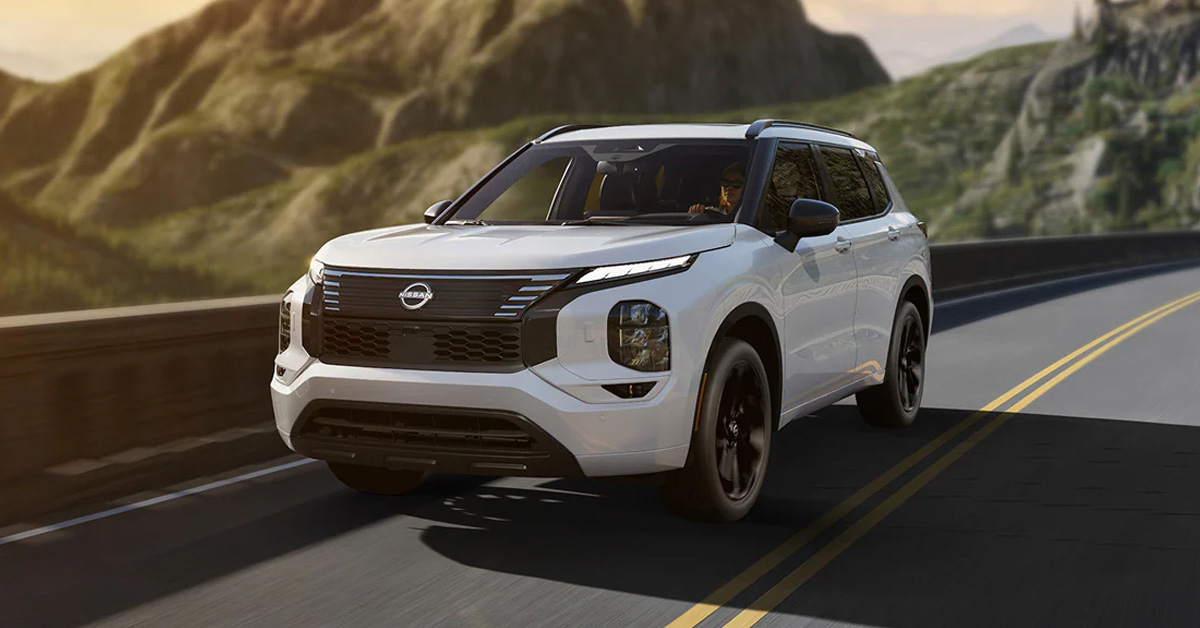
Choosing between the Nissan Rogue gas model and the Rogue Plug-in Hybrid comes down to how you drive, what you value in efficiency, and how much flexibility you want from your SUV. The gas-powered Rogue offers familiar ownership with up to 29 city/36 highway MPG, while the Rogue Plug-in Hybrid adds up to 38 miles of all-electric driving, up to 420 miles of total range, stronger output, and standard Intelligent All-Wheel Drive for drivers who want electrified versatility.
At Riverhead Nissan, we’re here to help drivers from Riverhead, Calverton, Mattituck, and The Hamptons find the right Nissan for their lifestyle, whether you’re shopping for a new vehicle, scheduling service, ordering parts, or exploring financing options that fit your needs. If you’re ready to compare the Rogue and Rogue Plug-in Hybrid in person, contact Riverhead Nissan or stop by today and let our team help you take the next step.
What’s the Difference Between the Nissan Rogue Gas and the Rogue Plug-in Hybrid?
The biggest difference in the Nissan Rogue gas vs PHEV 2026 comparison is how each Rogue creates and uses power. The gas-powered Rogue relies solely on its 1.5-liter VC-Turbo 3-cylinder engine paired with an Xtronic CVT, while the Rogue Plug-in Hybrid combines a 2.4-liter gas engine with twin electric motors and a 20 kWh battery.
That difference changes how each vehicle behaves day to day. The gas Rogue delivers a familiar drive with a conventional powertrain, while the plug-in hybrid can operate in multiple modes depending on the situation.
Rogue Plug-in Hybrid Drive Modes
- EV Mode for electric-only driving
- Save Mode to preserve battery power
- Charge Mode to replenish the battery using the gas engine
- Normal Mode for blended efficiency
The Rogue Plug-in Hybrid also uses a 1-speed automatic transmission, while the gas Rogue uses a continuously variable transmission. If your priority is simplicity, the gas model keeps things traditional. If flexibility in how your vehicle uses energy matters more, the plug-in hybrid offers more ways to drive.
Which Nissan Rogue Powertrain Makes More Sense for Daily Commuting?
For many commuters, the right answer in a 2026 Nissan Rogue hybrid comparison comes down to routine. If your weekday driving is predictable, the Rogue PHEV changes the equation with up to 38 miles of all-electric range, which could cover shorter daily trips without using gasoline at all.
Charging habits matter, though. The Rogue Plug-in Hybrid requires about 7.5 hours on a 240V charger for a full charge, so drivers with reliable home charging may get more value from its electrified setup. Those without that consistency may find the gas Rogue easier to live with.
Fueling patterns also shape the decision. The gas Rogue is rated at up to 29 city and 36 highway MPG, while the plug-in hybrid offers up to 64 MPGe with gas and electric operation.
If your commute changes often, includes longer highway stretches, or charging access is uncertain, the gas model keeps ownership straightforward. If most drives are shorter and repeatable, the Rogue PHEV aligns more naturally with daily commuting efficiency.
How Do Performance and Capability Compare Between Rogue and Rogue Plug-in Hybrid?
Performance in a Nissan Rogue PHEV vs. gasoline SUV matchup is not just about efficiency; it is also about how the vehicle responds when the road changes. The gas Rogue produces 201 horsepower and 225 lb-ft of torque, while the Rogue Plug-in Hybrid raises that to 248 net horsepower and 332 lb-ft of torque.
That extra torque can make a noticeable difference during merging, climbing, or accelerating from a stop. The plug-in hybrid also comes standard with Intelligent All-Wheel Drive and a Drive Mode Selector with seven modes, giving drivers more adaptability across changing conditions.
The gas Rogue offers available Intelligent All-Wheel Drive, depending on configuration, and uses a more familiar compact SUV performance setup.
Capability stays close in one practical area: both are rated to tow up to 1,500 pounds. For drivers focused on straightforward everyday performance, the gas Rogue keeps things familiar. For those who want stronger output and more configurable traction control, the plug-in hybrid offers a broader capability range.
Which Nissan Rogue Interior Better Fits Your Family or Lifestyle?
Choosing the best Nissan Rogue powertrain for commuters is one decision. Choosing the cabin that fits your day-to-day life is another.
The gas Rogue keeps things centered around compact SUV practicality, with seating for five and up to 36.5 cubic feet of cargo space behind the seats. That layout makes sense for drivers balancing groceries, sports gear, luggage, or weekday errands without needing extra passenger capacity.
The Rogue PHEV shifts priorities toward larger households, offering seating for up to seven with a third row. That added flexibility can matter for carpools or families who occasionally need extra seats, even if cargo priorities change.
Technology also separates the two experiences. The Rogue Plug-in Hybrid includes a 12.3-inch digital dashboard, an available Head-Up Display, and NissanConnect Rogue PHEV services. The gas Rogue offers NissanConnect, ProPILOT Assist, and available premium interior materials depending on the trim.
If your lifestyle revolves around cargo and five-passenger comfort, the gas-powered Rogue fits naturally. If passenger flexibility and a more tech-focused cabin matter more, the Rogue PHEV has the edge.
What Should You Consider About Long-Term Ownership Costs?
Long-term ownership is not just about sticker price. The gas Rogue starts at $30,490, while the Rogue Plug-in Hybrid starts at $45,990, which makes the upfront budget one of the clearest differences.
The fuel economy Nissan Rogue gas vs. plug-in hybrid conversation also depends heavily on how you actually drive. A driver with a short, predictable commute and regular charging access may use far less gasoline in the plug-in hybrid. Someone with inconsistent driving patterns or limited charging access may not benefit the same way.
Warranty coverage adds another ownership layer. The Rogue Plug-in Hybrid includes battery coverage for 96 months or 100,000 miles, alongside its standard warranty coverage.
Then there are everyday practical costs. Electricity rates and gas prices fluctuate, especially depending on region and timing, so exact savings are difficult to generalize without individual usage patterns. The better long-term value often comes down to routine. A vehicle that matches how you actually live tends to make the ownership equation easier over time.
Is the Nissan Rogue Gas or Rogue Plug-in Hybrid a Better Fit for Your Driving Habits?
The Nissan Rogue gas vs. PHEV 2026 decision becomes clearer when you think less about specifications and more about habits.
Choose the gas Rogue if your driving tends to be spontaneous. Maybe your weekdays vary, weekend trips happen without planning, or you simply prefer the predictability of fueling up and going. That ownership style asks less from your routine.
The Rogue PHEV makes more sense for drivers who like structure. If you typically follow the same commute, can charge consistently, and want more control over how energy is used, the plug-in hybrid aligns well with that lifestyle.
Passenger needs matter too. A solo commuter with occasional cargo needs may prioritize differently than a household juggling extra riders.
Neither option is universally better. The right fit depends on whether convenience means minimizing charging decisions or maximizing flexibility in how your vehicle operates. Matching the vehicle to your actual habits, instead of an idealized routine, is usually what leads to long-term satisfaction.
What’s the difference between the 2026 Nissan Rogue gas model and the PHEV version?
The 2026 Nissan Rogue gas model uses a 1.5-liter VC-Turbo 3-cylinder engine producing 201 horsepower and 225 lb-ft of torque, while the Rogue Plug-in Hybrid uses a 2.4-liter engine with a plug-in hybrid system producing 248 net horsepower and 332 lb-ft of torque. The gas Rogue seats five, while the Rogue Plug-in Hybrid seats up to seven and offers up to 38 miles of all-electric driving.
Is the Nissan Rogue PHEV worth it for daily commuting and city driving?
For drivers with shorter, predictable commutes and reliable charging access, the Rogue Plug-in Hybrid can make sense because it offers up to 38 miles of all-electric range and up to 64 MPGe. If charging access is inconsistent, the gas Rogue may be the simpler fit.
How much fuel can you save with the 2026 Nissan Rogue plug-in hybrid?
Fuel savings depend entirely on your driving habits, but the Rogue Plug-in Hybrid can reduce gasoline use significantly if your regular trips fit within its up to 38-mile all-electric range. Compared with the gas Rogue’s up to 29 city/36 highway MPG, drivers who charge regularly may rely on gasoline less often.
Does the Nissan Rogue PHEV qualify for tax credits or EV incentives in 2026?
Federal clean vehicle incentives may be available in 2026, but eligibility depends on current IRS rules, vehicle qualification requirements, and buyer circumstances, so confirmation should be made at the time of purchase. State or local EV incentives may also vary by location.
Which is better for long road trips: the Nissan Rogue gas or the PHEV?
The Rogue Plug-in Hybrid offers up to 420 miles of total range, which can make it a strong option for longer travel with gas and electric flexibility. The gas Rogue may be the simpler choice for drivers who prefer traditional fueling without planning around charging access.
Continue Your Nissan SUV Comparison at Riverhead Nissan
Choosing between the gas-powered Rogue and the Rogue Plug-in Hybrid often comes down to the details that matter most in your daily life. For some drivers, that means simpler ownership and familiar fueling. For others, it means added passenger flexibility, electrified commuting potential, and more control over how energy is used behind the wheel.
If you're in Calverton, Mattituck, or The Hamptons and still weighing your options, Riverhead Nissan is here to help you explore a wide selection of Nissan vehicles, including the Rogue and Rogue PHEV. Whether you're comparing trims, evaluating powertrains, or exploring financing options, our team can help you find the right fit for your lifestyle.
Keep Exploring Nissan SUV Comparisons
Still narrowing down your options? Continue exploring comparisons like Rogue trim differences, Nissan SUV engine comparisons, or Rogue luxury features to get a clearer picture of how different Nissan models align with your priorities.
Contact Riverhead Nissan today or visit us to learn more, ask questions, or continue your Nissan SUV search with a team ready to assist with sales, service, parts, and financing.
Contact Riverhead Nissan
Get Directions to Riverhead Nissan
Disclaimer: All information is provided for general informational and entertainment purposes only. While we strive for accuracy, we cannot guarantee that all content is complete, current, or error-free. Any reliance you place on such information is strictly at your own risk. This article may include opinions and is not endorsed by, or officially affiliated with, any vehicle manufacturer or brand. Always consult official sources – such as the vehicle’s owner’s manual, authorized dealerships, or certified professionals – for the most up-to-date and personalized information.